Preface
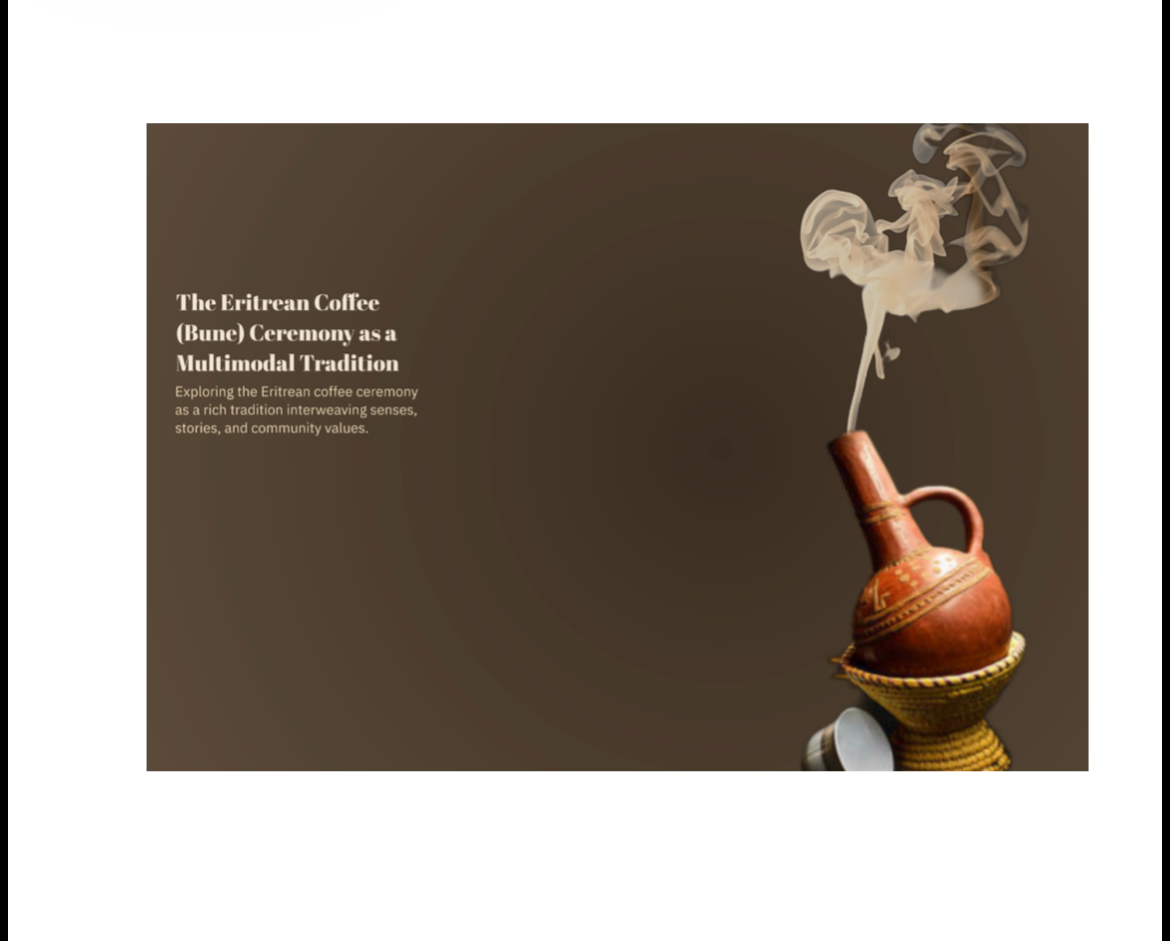
This artifact was composed for ENGL 3115: Multimodal Composition and taught by Professor Dylan Maloney. The final project, titled The Eritrean Bune Ceremony as a Multimodal Tradition, required students to design a comprehensive multimodal composition that demonstrated an understanding of the various modes of meaning-making explored throughout the semester. The purpose of the assignment was to combine all modes: visual, textual, spatial, and auditory rhetoric into a cohesive project that reflected both our creative and analytical execution. Professor Maloney encouraged us to move beyond conventional essays and instead construct an experience that embodied rhetorical awareness across different mediums.
The primary audience for this project was my professor and classmates, as I presented the piece in person as an optional extension of the assignment. However, because it centered on the Eritrean coffee ceremony, the presentation also addressed individuals unfamiliar with the tradition and guides them through the layered symbolic and communal significance. The genre was a multimodal presentation, combining visual slides, written analysis, and immersive audio elements to articulate the rhetorical dimensions of a lived cultural practice.
I selected this artifact because it represents a meaningful intersection between academic curiousity and personal identity. The Eritrean coffee ceremony, commonly referred to as the bune ceremony, is not an abstract subject for me. It is an active tradition in which I participate. Through this course, I was given the conceptual vocabulary to analyze what I had previously understood only through experience. Studying the ceremony as rhetoric, rather than simply performing the tradition shifted my perspective. It required me to examine how gesture, pacing, repetition, scent, sound, and spatial arrangement function as not only communal but also persuasive acts. This project reflects my development as a scholar capable of critically analyzing cultural traditions with both intellectual distance and personal reverence.
One of the project’s strongest qualities is its integration of audio, a medium I had not previously incorporated with intention. The sound design became central to the rhetorical experience: the rhythmic shaking of coffee beans as they roasted in the pan, the steady pounding of the mortar, and the steady pouring of brewed coffee into cups. These auditory elements did more than accompany the visuals. They invited the audience into the music and harmony of the ceremony. During the live presentation, these sounds transformed the classroom space, creating an atmosphere that was immersive. The project also demonstrated strong cohesion between analytical commentary and sensory illustration, ensuring that each mode reinforced the central claim about the ceremony’s rhetorical complexity.
If I were to revise this artifact further, I would expand its sensory range even more intentionally. I would incorporate motion through video or subtle animation would enhance the spatial and temporal dimensions of the ceremony. Ideally, I would also explore ways to evoke scent, such as the aroma of roasting coffee beans or burning incense, since smell plays a critical role in shaping the ceremonial atmosphere. These additions would strengthen the project’s immersive quality and further embody the argument that rhetoric operates through the full range of human senses.
Ultimately, I chose this piece for my portfolio because it demonstrates my ability to translate lived tradition into analytical discourse without diminishing its meaning. It reflects my growth in multimodal composition, my willingness to experiment with unfamiliar media, and my commitment to examining rhetoric within cultural practices that are often overlooked in academic spaces.